Detailed What to Pack info for your trip
look picture perfect in
3 effortless looks. One capsule wardrobe. Every color picked to match the city you're visiting.
Plus weather, checklists, and local style tips across 62 destinations.
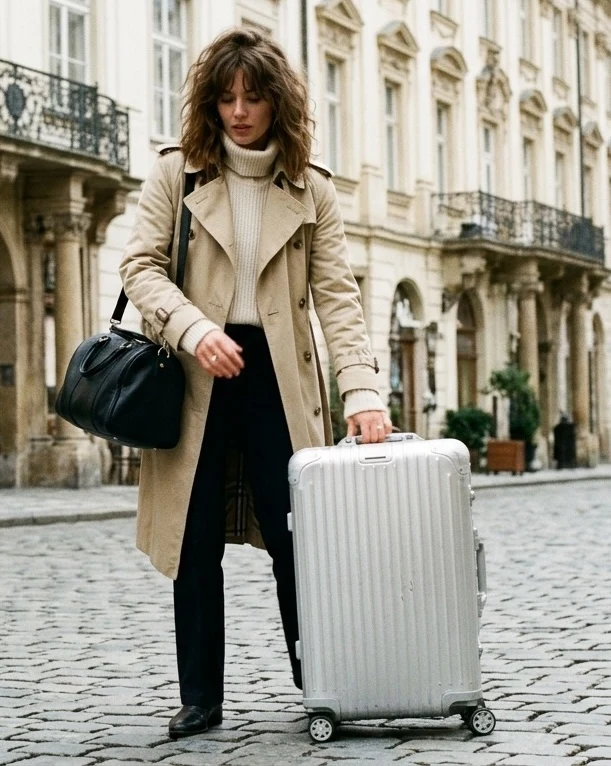
Here's how it works
What Colors to Wear in Santorini Photos?
Every guide includes a palette pulled from the city's architecture, landscape, and light — so you know exactly what to wear.
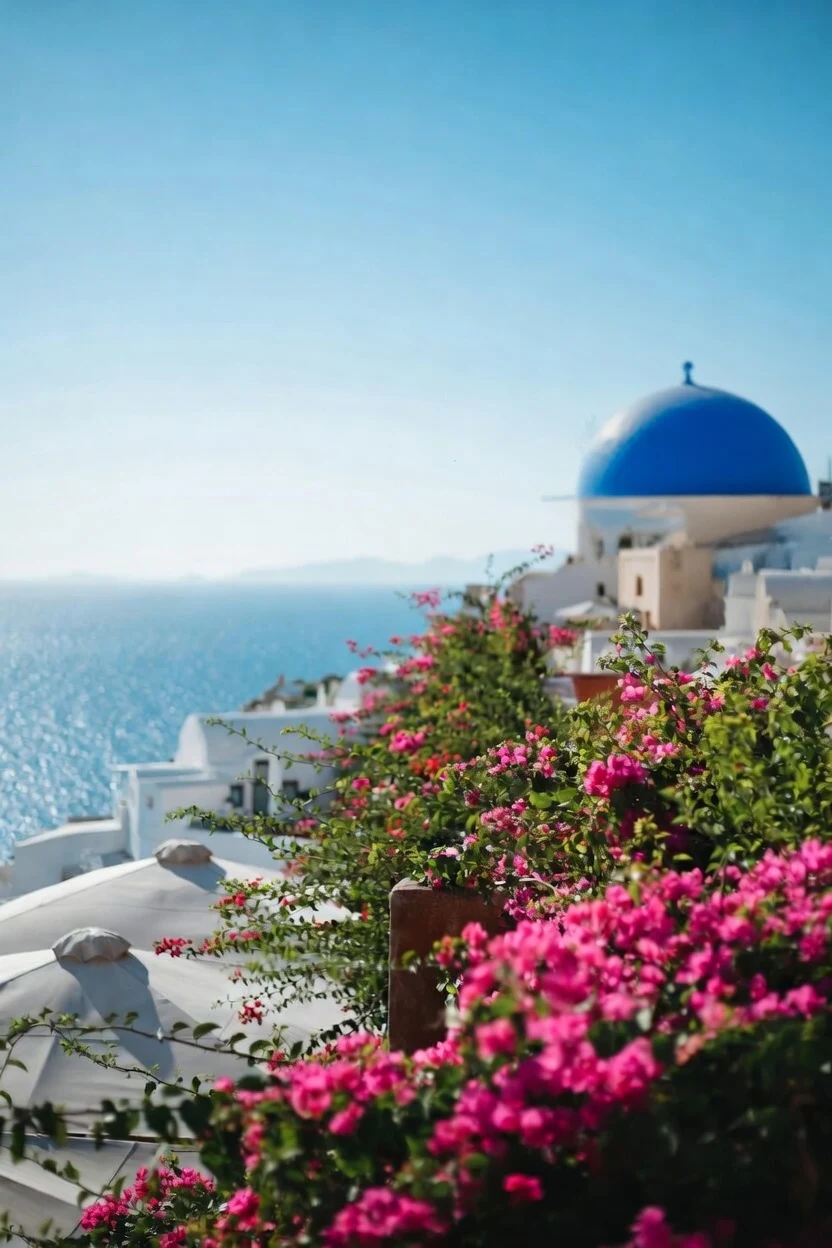
Top 3 Outfit Strategies in August
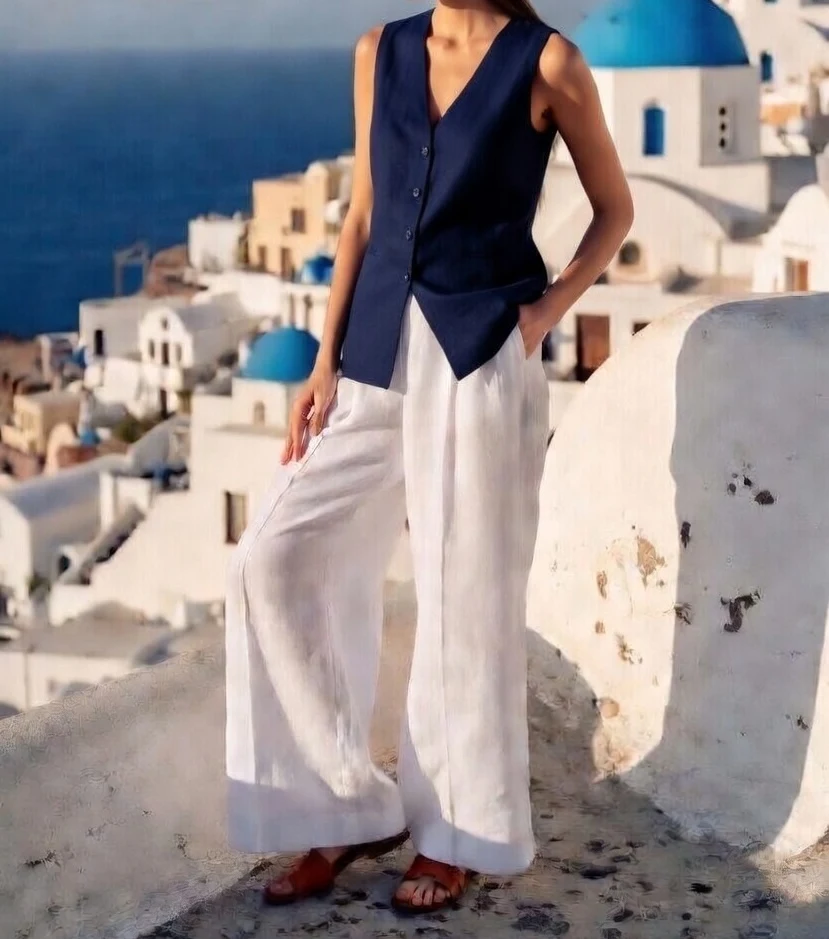
Blend In
A deeper navy than the domes allows you to anchor your look in the island's shadows, feeling integrated and local.
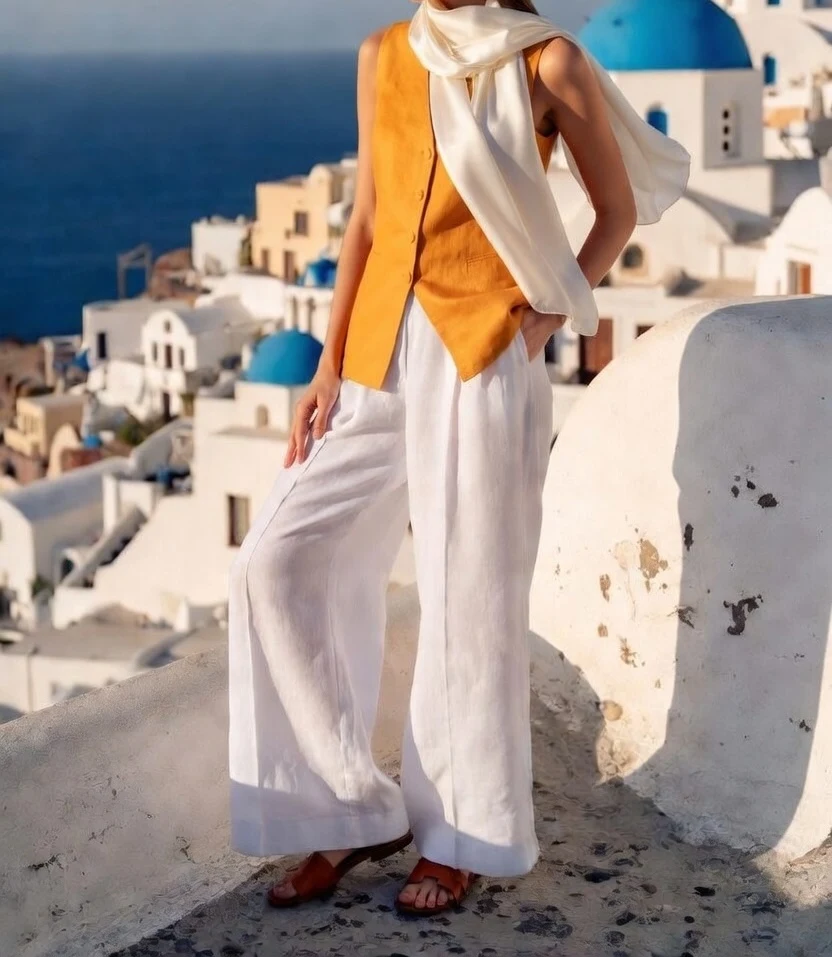
Stand Out
Warm golds and terracotta give you a sun-kissed contrast against the white walls that photographs beautifully at golden hour.
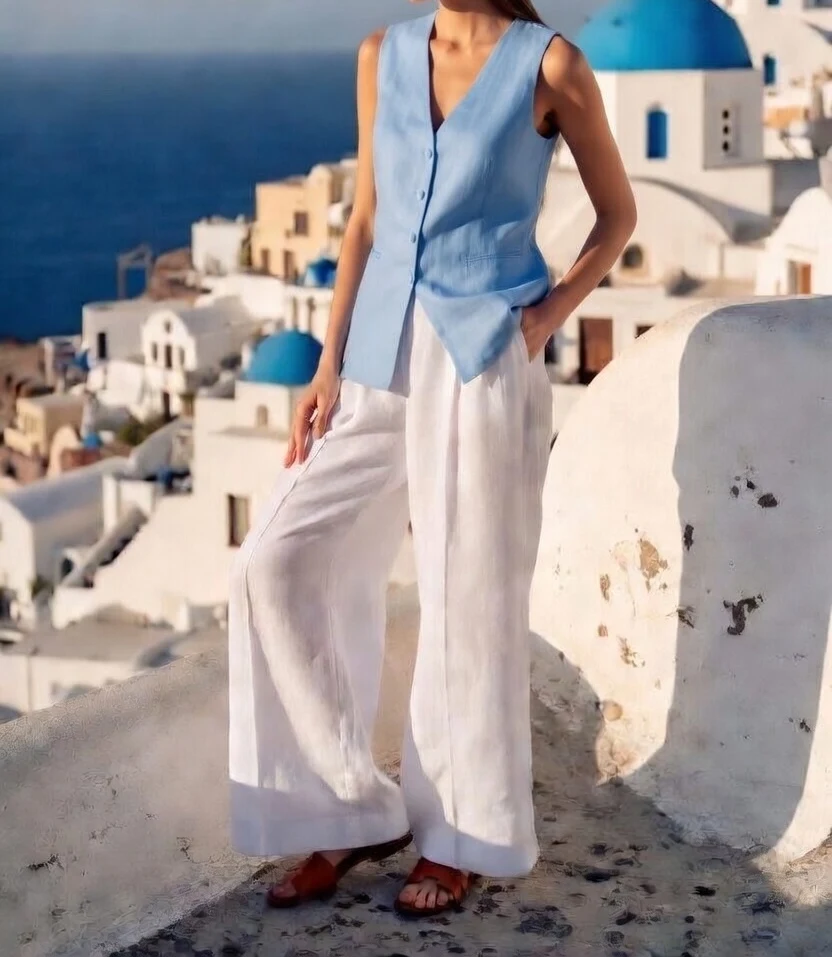
Classic
Soft sky blues and whites mirror the Cycladic palette without competing with it — effortless and timeless in every photo.
Where are you going?
Select your destination to read the detailed style guide and things to know before you pack.
April
5 guides
🇳🇱 Amsterdam
→Step outside in Amsterdam in April and you notice the damp air first, then the bells of passing trams, then the quick metallic rattle of bikes over bridge joints. The city smells like canal water, coffee, wet brick, and hot stroopwafels from market stalls, with a faint sweet note from flower stands around Bloemenmarkt and neighbourhood corners. The light is what changes everything. It lands on the gabled canal houses and makes the brick look warmer than the air actually is, while plane trees along the Herengracht are only just beginning to leaf out. April is when Amsterdam feels freshly reopened rather than fully dressed for summer. Locals still wear proper coats, cropped jackets, scarves, neat trainers, and ankle boots, because nobody who lives here confuses tulip season with T-shirt weather. You see people cycling one-handed with a bunch of tulips in the basket and the other hand tucked into a sleeve against the wind.

🇬🇷 Crete
→You smell orange blossom first in Crete in April, then wood smoke from village grills, then salt and diesel when the ferries nose into Souda or Heraklion. Church bells carry farther in the clearer spring air, and in Chania's old harbor you hear coffee cups knocking on saucers, gulls over the lighthouse, and suitcase wheels rattling on stone joints that were never designed for spinner cases. The island is green in a way summer visitors often miss: road verges are thick with wildflowers, groves are fresh rather than dusty, and the Lefka Ori still show streaks of snow behind lower hills already turning soft and bright. Locals do not dress for the postcard version of Crete yet. In April you see dark jeans, trainers, light puffers, neat wool coats, and knitwear over shirts, especially after sunset in Chania, Rethymno, and inland towns where the temperature drops faster than newcomers expect.

🇹🇷 Istanbul
→You notice Istanbul by smell before anything else in April: roasting chestnuts near tram stops, damp stone after a shower, diesel from ferries nosing into Eminönü, and the deep warm scent of simit carts working through the morning rush. The soundscape is equally specific. You hear the T1 bell in Sultanahmet, tea glasses clinking in alley cafés off Divanyolu, gulls arguing over the Galata Bridge, and then the call to prayer rolling from one hillside to another so that the city never sounds flat. April is tulip season, so the parks and medians around Sultanahmet, Gülhane, and Emirgan look sharper and brighter than they do in summer, but locals are not dressing for postcard warmth. Istanbulites in Nişantaşı, Kadıköy, and Karaköy are still in trench coats, light puffers, clean trainers, dark jeans, and thin scarves because they know the cloud cover, sea air, and long slopes can change the feel of the day fast.

🇨🇿 Prague
→You notice the sound first: tram bells clanging around Náměstí Republiky, the Astronomical Clock crowd shifting on Old Town Square, and the hollow click of shoes on wet stone after a brief shower. April in Prague smells like damp sandstone, coffee drifting from passages off Celetná, chimney smoke that has not quite disappeared with winter, and sweet dough from stands selling trdelník to people carrying willow whips for Easter. Along the Vltava, the air can feel several degrees colder than the thermometer suggests, especially on Charles Bridge where the wind slides straight between the statues and catches open collars. Trees begin to leaf out on Petřín and in Letná, but the city still reads in spring as red roofs, black church spires, pale façades, and long blue-grey shadows. Locals do not dress like it is warm; you see trench coats, short wool jackets, dark trainers, leather ankle boots, jeans, and practical crossbody bags on the metro. By comparison with June, the city has more room to breathe. Tour groups are back, especially around the castle circuit and Jewish Quarter, but Prague in April still belongs partly to residents using trams for ordinary errands and meeting under the horse statue on Wenceslas Square rather than only to weekend crowds.

🇸🇪 Stockholm
→You notice the air first in Stockholm in April: cold off the Baltic, then suddenly sweet near bakeries turning out cardamom buns, then metallic again when the Tunnelbana doors slide open below Sergels torg. Gulls wheel above Strömkajen, SL buses hiss at stops, and on Skeppsbron you hear ferry engines knocking against the quay before you even see the water. The light is the real surprise. It stretches late across the copper roofs and pale facades, but the warmth still lags behind, so locals in Gamla Stan and Norrmalm keep thin puffers, wool coats, dark trainers, and scarves in rotation even when they have sunglasses on. Around Kungsträdgården, people claim sunny benches the minute cherry buds start showing, yet nobody dresses as if it is proper spring; Stockholmers know the shade between buildings and the breeze over bridges can still bite.
May
17 guides🇳🇱 Amsterdam
→Step outside in Amsterdam in May and you notice movement first: bikes skimming over bridge joints, trams ringing through intersections, ferries pulling away behind Centraal, café chairs scraping back onto pavements that the city is finally using properly again. The air smells of canal water, coffee, wet brick, and fries, with flower stalls still adding sweetness around corners even after peak tulip-postcard season has started to fade. The light is longer and more generous than in April, and it changes the whole place. Canal houses look less wintry, the trees along Herengracht and Prinsengracht are properly in leaf, and the city feels less like it is reopening and more like it is fully in use. Locals still dress with caution. You see light jackets, overshirts, good trainers, scarves, denim, trench coats left open, and the kind of practical layering that assumes sun at lunch and drizzle by five. Nobody who lives here confuses a bright Amsterdam afternoon with guaranteed warmth once the wind reaches the bridge.

🇪🇸 Barcelona
→You notice the light first in Barcelona in May, but it is softer than June. It slides along the pale facades of the Eixample, flashes off bus shelters on Gran Via, and reaches down the narrow streets of the Barri Gotic without yet flattening the whole city into glare. In the morning you smell espresso, bakery sugar, and a little salt drifting in from the waterfront; around Catalunya and Universitat you hear scooters, suitcase wheels, and the metallic gust from the metro when doors open. By late morning, the queue lines outside the Sagrada Familia and Casa Batllo are already in sunglasses, shirtsleeves, loose trousers, light dresses, and clean trainers, but locals still often carry a knit or overshirt for later. Barcelona in May does not look fully summery. In Gracia, on Rambla de Catalunya, and around Passeig de Sant Joan, the city still dresses like spring with better weather: breathable fabrics, smarter layers, and less obvious beachwear than visitors expect from the map alone.

🇩🇪 Berlin
→Berlin in May smells greener and wetter than its reputation suggests. You get coffee from kiosk windows, cigarette smoke outside bars that have put tables back on the pavement, damp stone after a short shower, and cut grass drifting in from parks that suddenly matter again. The soundtrack is local immediately: tram bells in Prenzlauer Berg, S-Bahn metal above the street, skateboard wheels under the tracks at Warschauer Straße, and bottle crates shifting outside späti shops before evening. The city looks softer than in winter but not polished into postcard prettiness. Plane trees have filled out, courtyards start opening, and Tempelhofer Feld begins to feel inhabited again by cyclists, runners, and groups spreading blankets in the wind. Berliners do not dress like summer has officially started. You see light jackets, overshirts over tanks, straight trousers, dark jeans, neat trainers, and practical sandals on the warmer days because Berlin still means transit, mixed weather, and a lot of time outside without the certainty of heat. It is relaxed, but rarely careless.
🇬🇷 Crete
→You still smell orange blossom in Crete in May, but now it mixes more decisively with salt, sunscreen, coffee, grilled fish, and diesel from ferries edging into Souda or Heraklion. Chania's old harbor sounds brighter too: gulls over the lighthouse, cutlery on waterfront tables, scooter engines in the back lanes, and suitcase wheels still losing the argument with old stone. The island has moved on from April's green surprise into a clearer, brighter phase. Wildflowers remain at the edges, groves are no longer winter-soft, and the Lefka Ori sit farther back in the scene while the coast takes over. Locals in Chania, Rethymno, and Heraklion dress lighter than in April, but not carelessly. You see clean trainers, sandals with real soles, shirtsleeves, cotton dresses, loose trousers, and one overshirt or knit still carried for later. May on Crete is warmer, but it is not just beachwear and tavernas. The island still asks you to move between harbors, village squares, archaeological sites, and windier ferry edges in the same day.

🇭🇷 Dubrovnik
→Step outside in Dubrovnik in May and the first impression is lighter than summer but not timid. Salt hangs in the air around the old port, gulls wheel above the roofs, and the polished stone near Pile clicks under trainers and leather sandals instead of the flatter slap of high-summer beach shoes. By mid-morning, Stradun is bright enough to make everyone reach for sunglasses, yet the city still feels breathable. Bougainvillea begins to show harder colour against pale walls, bakery windows smell of burek and sweet pastries, and the sea below Fort Lovrijenac already has that impossible blue that keeps pulling people back to the parapet. Around Gruž, Lapad, and the Old Town edges, locals dress for movement rather than pure heat: light shirts, neat jeans or cotton trousers, airy dresses with a knit in the bag, and shoes that can handle stairs without drama. May in Dubrovnik is not beachwear by default. It is a month of churches, steps, ferries, and long bright walks.
🇹🇷 Istanbul
→You notice Istanbul by smell before anything else in May too, but the balance shifts. Roasting chestnuts retreat, while simit, sea air, coffee, and diesel from ferries pushing into Eminonu rise harder in the warmer light. Gulls still argue above the Galata Bridge, tea glasses still click in alleys off Divanyolu, and the call to prayer still rolls from ridge to ridge so the city never sounds flat, but the whole place feels more open than in April. Around Gulhane and Sultanahmet, the tulips have usually peaked or are fading, yet the plane trees and gardens have filled in enough to soften the stone. Locals in Nisantasi, Kadikoy, and Karakoy dress lighter, but not loosely. You see clean trainers, loafers, shirtsleeves, light trench coats tied around the waist, longer skirts, cotton trousers, and one scarf still carried for later. Istanbul in May is not beachwear city. It is still stairs, ferries, mosques, and neighborhoods that can turn breezy the minute you lose the sun.

🇵🇹 Lisbon
→You smell Lisbon before you quite see it: espresso drifting out of pastelarias, hot metal from Tram 28 on a tight turn, and that mix of river air and grilled sardines that clings to lanes below Alfama. In May, jacaranda trees are beginning to colour parts of the city, the light stays long over the Tagus, and the calçada throws brightness back upward so hard that sunglasses stop feeling optional by late morning. You hear tram bells in Graça, funicular brakes near Bica, and the clack of cups on zinc counters where locals still drink coffee standing up. Lisboners in May do not dress for the beach, even when the sun is strong. Around Chiado, Príncipe Real, and Avenida da Liberdade, you see linen shirts, straight trousers, light jackets, loafers, and clean trainers because the city still has wind, hills, and cooler shadows under its tiled facades.

🇬🇧 London
→Step out in London in May and the first thing you notice is the mix of smells rather than the skyline: damp plane-tree bark after an overnight shower, coffee drifting from kiosks in Green Park, a puff of hot brakes and diesel at a bus stop, and, near St James's, clipped grass and chestnut blossom. You hear suitcase wheels rattling over the paving by Covent Garden, black cabs grumbling at the lights on the Strand, and the drawn-out warning tone before Tube doors close under Leicester Square. In May the city is properly awake but not yet in full summer crush. The tulip beds and clipped lawns in Regent's Park look freshly ironed, pub terraces start filling after work, and the queues at Borough Market are real but still manageable if you go before lunch. Londoners dress for uncertainty with the efficiency of people who know the forecast will hedge its bets: trench coats left open, thin crew-neck knits, dark jeans, loafers or clean trainers, sunglasses pulled out at noon and tucked away again by three. Around Chelsea and Kensington during flower-show week you see more linen jackets, more floral prints, more people carrying garment bags and paper shopping sacks. Tourists are everywhere, but May still feels like the city belongs to people on their lunch break.

🇪🇸 Madrid
→You notice the brightness first, not the heat. In Madrid in May, the sky over Gran Via has usually cleared into that hard spring blue that makes cream facades and terracotta brick look scrubbed and sharper than they do in winter, but the air at street level still carries a little morning cool. Around Sol you hear Metro brakes, suitcase wheels over paving joints, coffee cups knocking against saucers, and the soft rustle of plane trees beginning to fill out. Plaza Mayor smells of espresso, frying olive oil, and sometimes damp stone after an overnight shower. Retiro feels especially alive in May: book stalls, joggers, rowboats knocking at the lake edge, and readers sitting in patches of shade with jackets tied around their bags for later. Locals do not dress as if summer has fully arrived. In Salamanca and Chamberi you see loafers, trainers, cotton shirts, loose trousers, light dresses, sunglasses, and the odd fine knit still kept on until midday. Madrid in May looks spring-smart rather than heat-defensive.

🇮🇹 Milan
→Step outside in Milan in May and you notice perfume, espresso, and warm stone almost at once. Near Duomo, the smell shifts between polished department-store air drifting out of Rinascente, roasted coffee from standing bars, and the faint metallic note of trams scraping through tight turns. The city sounds different from Rome or Naples: less shouting, more heels on paving, tram bells on Via Torino, and quick bursts of conversation outside pastry counters before work. Trees in Parco Sempione have filled in by now, wisteria still hangs in pockets around quieter courtyards, and the light stays longer on the pale facades in Brera. Locals dress for the city they actually inhabit, not the Italy people imagine from postcards. You see cropped trench coats, crisp shirts, dark jeans, straight trousers, trainers that still look clean, and loafers worn with intent rather than effort. May in Milan is stylish, but it is also practical, because rain can arrive fast and evening temperatures still slip back down.

🇮🇹 Naples
→You smell Naples before you properly see it. On a May morning near the port there is salt, diesel from ferries, coffee from bars already working hard, and a faint sweetness from sfogliatelle warming behind glass. Then you turn into the old centre and the city changes register: frying oil, laundry soap, old stone, incense drifting out of a church left open to the street. Sound comes in layers too. On Spaccanapoli you hear scooters squeezing through impossible gaps, shutters rattling up, snippets of Neapolitan shouted from balconies, and the sharp clack of cups landing on marble café counters. May is one of the best months to understand Naples because the city is fully outside again without yet sinking into the slower heat-management of midsummer. Locals are dressed for movement and contrast rather than pure heat: shirts with sleeves rolled, neat trainers, dark jeans or cropped trousers, long skirts, loafers, sunglasses, and one layer tied around the shoulders for later. You see fewer bare-shouldered tourist looks than first-time visitors expect, partly because Naples is still a real working city in May, not a beach resort with a cathedral attached. Churches like Gesù Nuovo and the Duomo are active spaces, and central Neapolitans still move between sacred interiors, chaotic streets, and smart evening aperitivo spots without changing persona.

🇫🇷 Paris
→Paris in May smells greener than it does in high summer. You get coffee and butter first, of course, then chestnut blossom in the gardens, damp stone after a short shower, and the faint metallic smell that rises from Métro grates when trains brake below. On the quays you hear joggers, bus doors, gulls near the river, the clack of café chairs being set out, and scooter engines slipping between cars on the boulevards. Around Rue de Rivoli and the Louvre, the pale façades look cleaner and cooler than they do in July; around the Jardin du Luxembourg and Palais Royal, leaves finally soften the formal geometry. Parisians dress for movement and uncertainty in May. You see trench coats worn open, neat trainers, loafers, cotton knits tied over shoulders, and skirts with proper jackets rather than fully committed summer looks. In the Marais and Saint-Germain, sunglasses come out by lunch but umbrellas stay close. The city feels used in a different way from midsummer: less terrace-sprawled, more in motion, with museums busy, parks full, and people still dressing as if weather matters.
🇨🇿 Prague
→You notice the sound first in Prague in May too, but it lands differently. Tram bells still clang around Namesti Republiky and shoes still click on stone, yet the city has softened. Trees are fuller on Petrin and in Letna, beer gardens begin to claim their season properly, and Old Town Square smells less of chimney smoke and more of coffee, rain on warm stone, and sweet dough drifting from passage bakeries off Celetna. The Vltava still throws a cooler breath across Charles Bridge, especially in the morning, but the afternoons finally let people sit longer in sleeves rather than jackets zipped to the throat. Locals are lighter dressed than in April, though not careless. You still see trench coats, overshirts, dark trainers, loafers, straight-leg trousers, light dresses, and crossbody bags on trams rather than full summer clothes. Prague in May looks greener and less severe, but it still reads as a city of river wind, polished stairs, and stone that cools faster than the photographs suggest.

🇮🇹 Rome
→Rome in May smells softer than it does in August. You get espresso and warm pastry first, then damp stone from overnight washing, clipped hedges near the Pincio, and the mineral spray of fountains where people stop to refill bottles before the day heats up. Around Termini the roller-bag clatter is still there, but it mixes with swifts overhead and the lower, more workable traffic hum of a city not yet flattened by Ferragosto or scorched into silence. By nine in the morning, Via Cola di Rienzo is already busy with people actually dressed for the day rather than for survival: trench coats left open, cotton shirts, loafers, neat trainers, sunglasses in hand rather than fixed permanently on the face. Around the Pantheon and Campo de' Fiori, visitors start in jackets that are knotted around waists by lunch, while Romans move in that polished spring uniform of navy knitwear, white shirts, midi skirts, and practical leather shoes. The light is flattering rather than brutal. Travertine still throws glare, but it is honeyed instead of blinding, and the city feels less hollow than in August because neighborhoods like Testaccio, Prati, and Monti are still operating at full local speed. Outdoor tables fill, market stalls look fresh rather than wilted, and queueing for a basilica or museum does not yet feel like standing in an oven.

🇬🇷 Santorini
→Santorini in May feels cleaner and more spacious than the island many people carry in their heads. You notice the light immediately, but in May it is not yet the hard August glare that makes every white wall feel reflective enough to squint off. The air smells of sea salt, coffee, warm dust, and wild herbs crushed somewhere below the path, with boat fuel drifting up faintly from the port when the wind turns. In Fira you hear rolling suitcases on volcanic paving, buses breathing in and out near the station, and church bells cutting through the open air. Around Oia and Imerovigli, footsteps echo more than traffic does. Locals dress like people living on an island with weather, not like permanent beach guests. You see jeans with shirts in the morning, loose dresses with cardigans tied over shoulders, neat trainers, and sandals that actually stay on the feet when the path turns steep. The island is already active in May, but it still has more room to breathe than peak summer, and that changes how everything looks and sounds.

🇮🇹 Venice
→Venice in May smells fresher than many people expect. You still get canal water, espresso, and old stone, but the air also carries spring damp, laundry from higher windows, and the faint salt of the lagoon when the breeze reaches in. You hear suitcase wheels fighting bridge steps near Santa Lucia, vaporetti knocking against floating stops, bells traveling cleanly across the water, and the slap of wakes against mossy walls in narrower canals. The city feels brighter without yet feeling exhausted by heat. Around Rialto and San Marco, the paving can warm quickly by midday, but in Cannaregio back lanes and the quieter parts of Castello there is still a real sense of season rather than pure tourism weather. Venetians do not dress like they are on a beach break just because the sun is out. You see shirts, light jackets, scarves, neat trainers, good leather shoes, and dresses with sleeves because Venice still means churches, bridge climbs, museum interiors, and a lot of practical movement through a very old city.

🇨🇭 Zurich
→You notice Zurich by layers of sound before you notice its postcard neatness. Tram bells ring at Paradeplatz, cyclists hiss past on damp streets near Bellevue, and the Limmat keeps reflecting church towers even after a quick shower has darkened the paving. In May the city smells of rain on stone, fresh bread from Confiserie-style windows, espresso near the station, and cut grass drifting over from lakeside parks. The chestnut trees along the quays are fully out, and the hills beyond the center are greener than people expect from a financial capital. Locals do not dress as if summer has arrived. Around Bahnhofstrasse, Kreis 4, and the Niederdorf, you see light trench coats, neat overshirts, scarves, dark jeans, and clean trainers because Zurich in May can swing from bright lunchtime sun to a wet, cooler evening without much warning. It is polished, but it is never careless.
June
12 guides
🇬🇷 Athens
→You notice the light first in Athens in June: sharp, white, almost metallic off the paving around Syntagma, then warmer and dustier once you turn into Plaka. The city smells different block by block. Near Monastiraki station there is grilled souvlaki smoke, hot sugar from loukoumades stalls, and a faint metallic tang from the trains; by mid-morning on Dionysiou Areopagitou you get dry pine, sun-baked stone, and warm resin rising off the hillside below the Acropolis. Cicadas start up in the greener pockets, and in the historic centre you hear the click of café cups, scooters slipping through narrow lanes, and suitcase wheels catching on uneven slabs around Adrianou and Kidathineon. June is not yet the punishing furnace of late July, but it is already bright enough that locals avoid standing in open squares at midday. Athenians dress for movement between sun and shade: loose shirts, airy dresses, tailored shorts, light cotton trousers, clean trainers, leather sandals with real soles, and sunglasses that stay on all day. You will see more locals eating late, lingering in shaded courtyards, and taking evening walks once the heat loosens its grip. Compared with the absolute peak of summer, June still feels workable. Museums, rooftop bars, and the Acropolis area are busy, but the city has not fully tipped into the slow, heat-managed rhythm of August when many Athenians leave for the islands.
🇪🇸 Barcelona
→You notice the light first in Barcelona in June: it hits the pale stone of the Eixample, bounces off bus shelters on Gran Via, and makes the cream façades around Passeig de Gràcia look sharper than they do in spring. Then come the smells--salt near Barceloneta, espresso drifting out of corner bars, hot sugar from ensaïmada counters, and the metallic tang of the metro when train doors open at Catalunya. On many mornings you hear suitcase wheels rattling over paving joints near the Barri Gòtic, scooters squeezing through side streets, and swifts cutting overhead between apartment blocks. By late morning the queue lines outside the Sagrada Família and Casa Batlló have hats, sleeveless tops, linen shirts, trainers, and the occasional polished sandal; locals heading to work still look more structured, often in loose trousers, crisp shirts, and light dresses rather than beachwear. June feels full but not yet crushed by the dense, slow-moving August crowd. Terraces are busy, beaches are active, and evenings stretch late, yet the city still keeps its weekday rhythm--deliveries on Carrer de Ferran, school pickups in Gràcia, and office workers claiming shaded lunch tables before visitors do. You can spend half a day around Plaça Reial and still hear Catalan conversation from neighbouring tables instead of only rolling suitcase handles and camera shutters.

🇸🇰 Bratislava
→Step outside in Bratislava in June and the first thing you notice is how many sounds are layered into a compact old center. Tram brakes scrape near the edge of Staré Mesto, terrace glasses tap under plane trees in Hviezdoslavovo námestie, and suitcase wheels clatter over stone joints that looked decorative until you tried to roll across them. The air often carries coffee, warm pavement, river moisture, and the sweet smell of linden blossoms if you catch the right street at the right time. Around Obchodná you hear a different city from the one below the castle: more retail shutters, more fast footsteps, more everyday Bratislava than postcard Bratislava. June light lingers here in a way that changes your sense of time. Dinner can feel early even when it is well into the evening, and people settle into outdoor tables as if the city has gained extra hours for free. Locals do not dress for peak heat yet. You see clean trainers, loafers, straight-leg jeans, airy dresses, and lightweight overshirts, with plenty of jackets tied around waists because everybody knows the riverfront cools faster than the inner lanes. Compared with July and August, June feels slightly looser, greener, and less overcommitted; there are plenty of visitors, but Bratislava still belongs visibly to residents commuting, shopping, and taking the long way home through the squares.

🇭🇺 Budapest
→Budapest in June opens with the sound of tram bells, riverboats cutting through the Danube, and café chairs scraping across stone pavements. You smell coffee, pastries, and occasionally thermal mineral water drifting from bath complexes like Széchenyi or Gellért. By midday, sunlight reflects off the Parliament building and Chain Bridge, warming the city noticeably, especially on the Pest side where streets are wide and open. Locals dress lightly but neatly — cotton shirts, dresses, and clean trainers or sandals — practical for walking but still polished enough for cafés and bars.
🇭🇷 Dubrovnik
→Step outside in Dubrovnik in June and you get hit by three things at once: salt, hot stone, and the faint diesel breath of boats moving in and out of the old port. Gulls are always arguing overhead, suitcase wheels chatter on the limestone near Pile, and by mid-morning the sound of sandals on polished paving mixes with the low thrum of tour groups funneling toward Stradun. The city is visually sharper in June than in shoulder season. Laundry lines disappear behind shutters, bougainvillea starts showing harder colour against pale walls, and the sea below Fort Lovrijenac turns that unreal blue that makes everyone stop on the same corner for the same photo. Locals do not dress for a beach strip just because the Adriatic is next door. Around Gruž, Lapad, and the Old Town edges, you see linen shirts, proper sandals, airy dresses, and clean trainers, because Dubrovnik in June is hot but still very much a city of churches, stairs, and hard surfaces.

🇬🇧 Edinburgh
→You notice Edinburgh first by sound: gulls over Waverley, bagpipes floating up the Royal Mile, buses grinding up North Bridge, and the slap of shoes on wet stone when a quick shower has just passed. In June the air often smells of coffee, old masonry, fryer oil from takeaway shops near the station, and cut grass drifting up from Princes Street Gardens below the Castle rock. The city looks greener than first-timers expect. The gardens are full, the volcanic crags around Arthur's Seat turn richer, and the long northern light keeps the sandstone facades glowing much later into the evening than visitors from farther south are used to. Locals do not dress as if it is guaranteed summer. Around Stockbridge, the New Town, and the Royal Mile you see trench coats, lightweight puffers, neat knits, denim jackets, scarves, and clean trainers because Edinburgh's June weather can still feel cool in shade, on exposed viewpoints, and after sunset.

🇮🇹 Florence
→In Florence in June, you smell espresso, warm stone, leather-shop air and sun-baked river water almost as soon as you step out. Around Santa Maria Novella, rolling suitcase wheels chatter over paving seams, while near the Duomo the sound is more about camera shutters, church bells and voices bouncing hard off marble. By midday, Via dei Calzaiuoli turns bright enough that locals slip into the shade side of the street without even thinking about it. The city looks sharper in June: shutters thrown open, ochre and cream facades glaring in the sun, laundry tucked into interior courtyards, and the green hills beyond San Miniato showing up in clearer evening light. Florentines do not dress for sloppy heat. You see sleeved linen shirts, airy dresses with decent sandals, neat loafers, sunglasses that look chosen rather than emergency-bought, and a very particular refusal to wear beachwear in the historic center even when the temperature climbs.

🇩🇪 Hamburg
→Hamburg in June greets you with air that smells faintly of water, diesel, and roasted coffee drifting out of cafés around Speicherstadt. Step outside near Landungsbrücken and you hear gulls cutting across ferry horns, the slap of water against quay walls, and the low hum of port activity that never quite stops. The light is softer than southern cities but still long, stretching well into the evening, and the sky rarely settles into one mood for long. One moment you are walking along the Binnenalster in sunshine, the next a grey band rolls in from the Elbe and the temperature dips just enough to notice. Locals dress with that in mind: clean trainers, dark jeans or tailored trousers, layered tops, and a light jacket that stays on or off depending on the wind. You will rarely see locals in full summer outfits unless the day is unusually warm; Hamburg style leans practical and understated, even in June. Compared with peak summer in July and August, June feels fresher, less humid, and easier for long walks through HafenCity, St. Pauli, and along the Alster loops without the heavy crowds or heat.
🇪🇸 Madrid
→You notice the light first. By mid-morning in June, Madrid’s sky has that hard, almost white-blue cast that makes the façades along Gran Vía look cleaner and sharper than they do in winter. Step out near Sol and you hear suitcase wheels drumming over the joins in the paving, Metro musicians under the red diamond signs, and the quick hiss of espresso machines from bars already pulling second breakfasts. There is a faint smell of hot stone, coffee, sunscreen, and frying olive oil from kitchens preparing tortillas before lunch. In Plaza Mayor the arcades hold a little cool shade, but the open center can feel oven-like by early afternoon. Locals know it and dress accordingly: linen shirts untucked at the collar, lightweight dresses, polished trainers, loafers without heavy socks, sunglasses on as soon as they leave the building. Office workers still look put together in the Salamanca district, but fabrics get looser and darker jackets disappear until late. June is not August, so the city has not emptied out, and Madrid still runs on a working rhythm. Retiro fills with readers, runners, and people carrying water bottles rather than beach gear, and terraces in La Latina and on Calle Ponzano start filling long before sunset because the evenings stretch so late.

🇵🇹 Porto
→You notice Porto through your nose before your camera settles down. In the morning around São Bento, there is warm coffee, damp stone and a faint metallic smell from tram lines and old rails, and once you drop toward Ribeira the air picks up river water, wine-cask cellars from Gaia and grilled fish from lunch kitchens getting ready early. The city sounds different from Lisbon: gulls wheel lower, church bells from Clérigos cut across the rooftops, and suitcase wheels clatter noisily over narrow granite joints instead of gliding. In June the light is already strong by late morning, but Porto still keeps an Atlantic reserve. You see sun on the azulejo facades, laundry shifting above the alleys near Sé, and shadows that stay surprisingly cool until noon. Locals do not dress for beach heat in the city centre. Men in linen shirts or polos still carry a light jacket over one shoulder; women in straight trousers, loose dresses, denim jackets and smart trainers move as if they already know the wind will change by the river. June is lively without yet feeling flattened by the thickest midsummer crowds. There are more visitors on the bridge, more terrace tables taken, and longer lines at Livraria Lello, but the city still belongs to people doing school runs, office errands and late lunches on Rua das Flores. You can still hear Portuguese around you instead of the full summer blend of cruise-day noise that takes over later.

🇮🇹 Sicily
→Sicily in June smells of salt, lemons, hot stone, espresso, and frying aubergines before you have even settled in. You hear scooters bouncing through narrow streets in Palermo and Catania, gulls over harbour walls, church bells from hill towns, and cutlery clattering on terraces that are already busy by sunset. The island changes by the hour. In the morning, fish markets and cafés still feel fresh and local; by noon, the light turns hard and the façades in places like Ortigia, Noto, and Cefalù begin to glow the colour of warm honey. June is when Sicily looks exactly like people hope it will, but still behaves like a real place rather than a baked postcard. Locals dress for heat with more care than visitors often expect: loose shirts, airy dresses, linen trousers, neat sandals, and practical sunglasses, because the island is beautiful but still full of steps, paving, heat, and long, social evenings.

🇨🇭 Zermatt
→You hear Zermatt before you settle into it: the sharp hum of electric taxis, the clatter of boots on Bahnhofstrasse, the station announcements under the Matterhorn Gotthard Bahn canopy, and cowbells drifting in from higher pastures when the wind shifts down the valley. The air smells different here from lower Swiss towns. In June it carries wet timber from old chalet walls, cold stone after rain, bakery air near the station, and that clean metallic scent that comes off snowfields still visible above the tree line. The Matterhorn is not just a backdrop; it keeps reappearing at the end of streets, behind hotel roofs, and above church spires in a way that shapes how people move through the village. Locals do not dress for postcard summer. You see technical jackets, slim hiking trousers, wool pullovers, trail shoes, and light puffers because everyone in Zermatt understands that a sunny platform in the village and a windy lookout at 3,000 metres are two completely different climates.
July
15 guides
🇹🇷 Antalya
→Antalya in July hits with heat, salt air, and the hum of cicadas the moment you step outside. You smell sunscreen, grilled fish from harbour restaurants, and hot stone warming through Kaleiçi’s narrow streets. The soundscape shifts between waves breaking below the cliffs, scooter engines climbing steep lanes, and café chatter spilling out onto shaded courtyards. By midday, the sun feels direct and strong, especially around Hadrian’s Gate and the marina, where pale stone reflects heat back upward. Locals move differently in July, sticking to shade, wearing loose cotton shirts, linen trousers, and breathable dresses, with sandals or simple trainers rather than heavy footwear.
🇩🇪 Berlin
→You smell Berlin in July before you think about monuments. It is coffee from kiosk windows, sunscreen and cigarette smoke in the parks, grilled sausages near U-Bahn exits, and warm concrete after a shower has passed through Friedrichshain. The sound is equally local: tram bells in Prenzlauer Berg, bottles clinking in canal-side groups at Maybachufer, skateboard wheels under the tracks at Warschauer Straße, and the slow metal groan of S-Bahn trains above street level. July light makes the city look softer than its reputation. Plane trees fill out along wide avenues, beer gardens run late, and Tempelhofer Feld stays full of cyclists, picnickers, and people dragging disposable barbecues through the grass. Berliners do not dress as if they are on a beach holiday just because it is hot. You see loose shirts, tank tops under overshirts, straight trousers, good sandals, and clean trainers because the city still means walking, transit, and sitting outside until dark rather than dressing for one perfect photo stop.

🇧🇪 Bruges
→You notice Bruges in July by sound almost as much as by sight. Horse hooves clip across the Markt, bikes tick over cobbles in narrow lanes, canal-boat motors hum under low bridges, and the Belfry bells keep cutting through the tourist chatter. The smell is part of the place too: waffle batter near Steenstraat, chocolate drifting out of shop doors, beer yeast near old brown cafés, and warm canal water when the sun has been sitting on the quays for hours. Rozenhoedkaai and the Dijver look almost theatrical in July light, with reflections sharp enough to stop people mid-step. Locals do not dress as if Bruges were a beach trip. You see airy shirts, light dresses, neat trousers, cardigans tied over shoulders, and sensible sandals or trainers, because the city is beautiful but stubborn underfoot, with polished stone, church interiors, and enough evening cool to punish anyone who packed only for midday sunshine.

🇧🇬 Bulgaria
→Step outside in Bulgaria in July and the smell changes by region before the day even settles. In Sofia, you get linden trees, espresso, hot paving, and the dry metallic hum of trams around Serdika. In Plovdiv, the heat comes off the stones around Kapana and the Roman Stadium faster, with grilled kebapche and cigarette smoke hanging in the lanes by evening. On the Black Sea, especially around Varna, you get sunscreen, salty air, fried sprats, and beach speakers testing bass before noon. July is the month when Bulgaria feels fully open-air: café tables spread deeper onto pavements, village festivals run late, and the cities sound more public, from church bells in old centers to the rattle of trolleybuses and the clipped hiss of espresso machines in shaded squares. Locals do not dress as though the whole country shares one climate. In Sofia, you still see jeans, shirts, and trainers after sunset because the air can cool quickly once the mountain edge takes the sun away. Along the coast, people move in lighter fabrics, but even there they usually keep one extra layer for bus rides, breezy promenades, or restaurants after dark. July is busy, but not in one uniform way: Sofia fills with open-air performances and terrace life, coastal towns swell with beach traffic and late-night promenading, and mountain gateways like Samokov or Bansko feel like launch pads for a cooler second half of the day.

🇹🇷 Cappadocia
→Step outside in Cappadocia in July and you smell dust first, then wood smoke from an early tandır oven, then the faint sweetness of apricots drying in village shops. A few minutes before sunrise, the air still feels cool enough to wake you properly, and then the burners begin: that sudden dragon-breath roar from the hot air balloons above Göreme that every visitor remembers after they leave. Roosters call from below the cave hotels, dogs bark at the first vans collecting balloon passengers, and on Müze Yolu the town starts moving before many cities have switched on their coffee machines. By 07:00, Aydınlı and Gaferli are already full of people angling for the terrace shot, while guides wave groups toward Rose Valley and the Göreme Open Air Museum. July is peak season in Cappadocia, but it is a peculiar kind of peak: the region is most crowded at dawn and sunset, then it thins in the hottest stretch of the afternoon when the exposed valleys go pale and bright under a hard sky. Locals do not dress here as if they are heading to a beach resort. You see loose cotton shirts, lightweight trousers, long skirts, breathable dresses, caps, sunglasses, and practical trainers, because stone dust, stairs, and sun are part of the day even if the itinerary looks romantic on paper.

🇮🇹 Cinque Terre
→Cinque Terre in July hits you first with heat rising off pastel walls, salt air drifting through narrow lanes, and the sound of waves echoing below steep cliffs. In villages like Manarola and Vernazza, you hear suitcases rattling over stone steps, shutters opening, and the clink of espresso cups early in the day. By midday, the sun reflects off the sea and colourful buildings, intensifying the heat, especially on exposed paths like the Sentiero Azzurro. Locals dress simply but practically — light cotton clothing, sandals or trainers, and hats — moving through shaded alleys and avoiding long climbs during peak sun.

🇩🇰 Copenhagen
→Step outside in Copenhagen in July and you notice three things almost at once: the briny smell from the harbour, the sweet hit of cardamom buns drifting out of bakeries around Indre By, and the click of bicycle freewheels as riders coast up to red lights. By breakfast, the low sun is already bright on the copper spires, and by late evening the sky still hangs pale over Nyhavn long after people in many cities would have gone inside. On Dronning Louises Bro you hear bike bells, snippets of Danish, and the splash of people diving into the lakeside water zones further out; near Kongens Nytorv it is suitcase wheels on old paving, espresso machines, and buskers competing with the clatter from café terraces. July is high season, so queues at Rosenborg, canal tours, and the steps around the Little Mermaid are real, but Copenhagen's crowd pattern spreads outward rather than compressing into one old-town knot. Locals do not dress for a heatwave fantasy here: you see loose shirts, boxy tees, light trousers, unlined overshirts, sandals with substance, and plenty of thin rain shells stuffed into bike baskets. Even when the afternoon is warm, people still keep a layer handy for bridge crossings, harbour buses, and late dinners outside in Christianshavn.

🇳🇴 Fjords in Norway
→The fjords in Norway hit you first through the air. You smell wet pine, cold water, diesel from express boats, and that clean mineral scent that comes off rock faces after rain. The soundscape is just as specific: gulls over harbour quays, waterfalls you hear before you see, ferries docking with a metallic thud, and the softer rattle of campervans and tour buses pausing at viewpoints. In July the landscape is at full volume. Snow still hangs in streaks on higher shoulders, waterfalls are still fat from meltwater, and the slopes above places like Flåm, Geiranger, and the Hardangerfjord look impossibly green rather than rugged and bare. Locals do not dress for postcard summer. In Bergen, Flåm, and the smaller fjord villages, people wear waterproof shells, fleeces, hiking trousers, trainers, and puffers tied around their waists because they know a sunny quay and a glacier overlook can feel like two different countries in the same afternoon.

🇮🇪 Ireland
→Ireland in July smells of wet grass, turf smoke where people still light fires on cooler days, sea salt on the west coast, and chips steaming out of paper near harbours and market towns. You hear gulls over Galway docks, trad music leaking out of pub doorways before dark, tyres hissing on wet country roads, and sheep somewhere you still cannot see when the road narrows in Connemara or Kerry. The light is the thing people underestimate. It hangs around late over stone walls, bog, and headlands, and even on cloudy evenings there is a silvery glow that keeps the landscape looking awake. Locals do not dress like it is guaranteed summer. In towns from Westport to Kinsale, people wear waterproofs, light knits, fleeces, trainers, and jeans because a pub garden in sunshine and a cliff walk in wind are still two different climates in the same day.

🇸🇮 Lake Bled
→You notice the soundscape first at Lake Bled in July: oars knocking softly against wooden boats, church bells carrying across the water from the island, and the steady swish of cyclists and walkers circling the lake path before the day fully warms up. Then the smells arrive in layers. Near the promenade there is lake water, damp grass, sunscreen, and coffee; around the bakeries you catch warm pastry and cream; up by the castle path the air shifts toward pine, hot stone, and leaf mould after rain. July is peak season in Bled, but the place still feels more outdoorsy than urban. People move in a very specific local rhythm: early swims, daypacks instead of city handbags, sporty sandals, trail-ready trainers, and light waterproofs rolled into backpacks because everyone who knows Bled knows the sky can change quickly. Slovenian families and regional visitors from Austria, Italy, and Croatia tend to dress for walking, rowing, and hill viewpoints rather than for posing on a quay all day. That matters here. The route around the lake looks easy on a postcard, but the surfaces shift from smooth promenade to gravelly edges, and if you add Mala Osojnica, Ojstrica, or the climb to Blejski grad, your outfit needs to be ready for effort, shade, sweat, and possibly rain within the same afternoon.
🇫🇷 Paris
→You notice Paris in July first by smell and sound. Metro brakes screech under the grates, café cups knock against saucers on terraces, scooters whine across intersections, and somewhere not far away a siren always seems to be crossing the river. The air carries espresso, hot stone, cigarette smoke, bakery butter, and the faint green smell of the Seine on warmer evenings. Around the Louvre, Rue de Rivoli, and Île Saint-Louis, the light gets hard by late morning and turns the pale façades almost chalky, while chestnut trees and plane trees soften the edges along the quays and in the Tuileries. Parisians in July do not dress like they are going to the beach. You see sleeved linen shirts, airy dresses with structure, neat sandals, loafers, and good sunglasses because the city still involves churches, museums, polished floors, and long walks rather than one simple sunbathing day.

🇦🇹 Salzburg
→You hear Salzburg before you fully see it in July. Church bells carry across the Salzach, trolleybuses hum over the bridges, horse hooves crack lightly on old-town paving near Residenzplatz, and somewhere in the background a violin or rehearsal piano drifts out from an open window during Festival season. The air smells different from most city breaks: coffee, rain on stone, cut grass from the riverbanks, warm pretzels, and occasionally the faint horse smell around Kapitelplatz. The city looks very finished in July, with the Hohensalzburg Fortress sitting bright above the old town and the domes and pale façades around the cathedral glowing in evening light. Locals do not dress sloppily just because it is summer. You see linen shirts, crisp dresses, loafers, good sandals, and light jackets because Salzburg's culture calendar and polished streets push the city slightly dressier than a normal alpine stopover.

🇷🇴 Transylvania
→You notice wood smoke, damp plaster, and coffee before you notice Dracula souvenirs. In July, Transylvania sounds like church bells bouncing off painted facades, trolleybus wires humming in Brașov, and the hard clack of suitcase wheels on old stone where the lanes narrow near Strada Sforii. Step into Piața Sfatului in the morning and the postcard pieces are all there, but they are not static: delivery vans edge through early, café staff drag out chairs, and day-trippers look up toward the Tâmpa sign while swifts cut across the square. The light is generous in July, yet the region never feels baked flat like the Romanian south. Forested slopes sit close behind the towns, so even warm afternoons carry the sense that shade is nearby. Locals dress more practically than the Gothic marketing suggests. In Brașov and Sibiu, you see clean trainers, straight-leg jeans, easy dresses, overshirts, and thin cardigans looped over bags for later, because everybody knows the temperature drops fast once the sun leaves the square. July is full season here, which means Bran's queues start early, Sighișoara's lanes are thick with cameras by midday, and the cable car line in Brașov is no longer a casual decision. What disappears in July is shoulder-season hush; what replaces it is a very Transylvanian rhythm of bright lunch hours, short storms, and long, cool evenings in stone courtyards.
🇮🇹 Venice
→Venice in July smells of canal water, espresso, sunscreen, and warm stone almost the moment you step off the vaporetto. You hear suitcase wheels thudding over bridge steps, vaporetti engines idling at busy stops, church bells crossing the water, and the slap of small wakes against fondamenta walls. The city feels bright early, then slowly heavier as the day warms. Around Rialto and San Marco, the paving throws heat back upward, while narrower lanes behind Campo Santa Margherita or Cannaregio trap humidity in a way that catches first-time visitors off guard. Locals do not dress as if Venice were a beach resort, even in July. You see loose shirts, sleeved dresses, linen trousers, neat sandals, and practical sunglasses because the city still means churches, museums, polished paving, and endless bridges rather than one simple seaside day.

🇦🇹 Vienna
→Vienna in July begins with the sound of tram bells gliding past and coffee cups clinking in traditional cafés. You smell espresso, pastries like Sachertorte, and occasionally warm stone from wide boulevards such as the Ringstrasse. By midday, sunlight floods open squares like Stephansplatz and Karlsplatz, reflecting off pale façades and making the heat feel stronger than the temperature suggests. Locals dress with a sense of structure even in summer — lightweight dresses, crisp shirts, and clean footwear — rarely looking overly casual despite the warmth.
August
11 guides
🇵🇹 Algarve
→The Algarve in August smells like salt air, sunscreen, and grilled sardines drifting from beachside restaurants. You hear waves hitting the base of golden cliffs, flip-flops on boardwalks, and the distant hum of boat engines heading toward caves like Benagil. By midday, the sun is strong, especially on beaches like Praia da Marinha or Praia da Rocha, where there is little natural shade. Locals dress lightly and practically — linen shirts, loose dresses, and sandals — often carrying beach bags and moving between cafés and shaded spots during peak heat.

🇮🇹 Amalfi Coast
→You notice the Amalfi Coast in August through your skin almost before your eyes. The air feels warm and slightly salty, then you catch the smell of lemons, sunscreen, hot stone, and grilled seafood drifting up from beach clubs and waterfront restaurants. The sounds are just as specific: ferry engines pushing into Amalfi harbor, suitcase wheels clattering over Positano's steps, church bells bouncing off steep walls, and scooters whining through narrow coast-road towns. In places like Amalfi, Positano, and Minori, the light is hard by late morning and turns every whitewashed wall, tiled dome, and marina railing into a heat amplifier. Locals dress accordingly. You see airy shirts, simple sundresses, leather sandals, linen trousers, and sunglasses that look good but still work, because nobody who lives here treats August like a cool Mediterranean breeze fantasy once the sun is overhead.

🇧🇪 Brussels
→Step outside in Brussels in August and the first thing you notice is the smell: warm butter from waffle stands, roasted coffee from corner cafés, and a faint metallic dampness that hangs in the air after a passing shower. Then come the sounds that make central Brussels unmistakable: trams grinding through curves, the clack of café glasses under arcades, and suitcase wheels complaining across the stone around Grand-Place. By mid-morning, the guildhouse façades look almost theatrical in the changing light, one minute glowing gold, the next going flat under a sheet of cloud. Around Galeries Royales Saint-Hubert you get perfume, chocolate, and cool shade; around Bourse and Anspach you get heat rising from paving, snippets of French and Dutch, and delivery bikes threading through pedestrians. August is holiday month in Brussels, so the city centre never empties, but the local office rhythm softens. You see more people in neat shorts, oversized shirts, straight-leg trousers, and practical white trainers than in anything flashy. Brussels locals in summer rarely dress as if they expect a heatwave to last all day; they carry one layer, one umbrella, and move fast when the rain starts. The city still feels fully open, but with a looser pace than the business-heavy weeks before and after.

🇪🇸 Costa del Sol
→Costa del Sol in August smells of sunscreen, fried fish, sea salt, and hot stone the moment you leave your hotel. You hear beach bars thumping softly before lunch, mopeds weaving through marina roads, cutlery on shaded terraces, and the low slap of waves against harbour walls in places like Marbella, Fuengirola, and Málaga. By midday, the light is fierce. It bounces off white apartment blocks, marina railings, and pale promenades, and the beaches from Nerja to Estepona look brighter than the thermometer alone suggests. Locals dress for heat in a very coastal Andalusian way: airy shirts, linen dresses, flat sandals, espadrilles, and sunglasses that can handle glare from both sea and pavement. Nobody sensible dresses for long August afternoons here in heavy fabrics unless they are going straight from air conditioning to a dinner table.

🇪🇸 Ibiza
→Ibiza in August hits you with heat, music, and salt air the moment you step outside. You smell sunscreen, sea spray, and cocktails before you even reach the beach, and you hear basslines drifting from beach clubs like Ushuaïa long before sunset. Around Ibiza Town and Playa d’en Bossa, the rhythm is constant: taxis pulling up, music checks from open-air venues, and people moving between beach, hotel, and pre-drinks. The light is sharp and bright through the afternoon, bouncing off white villas and pale sand, while the sea stays impossibly clear in coves like Cala Bassa. Locals and regulars don’t overdress for the heat. You see floaty dresses, oversized shirts over swimwear, statement sunglasses, and practical sandals during the day, with a clear shift into bolder, more styled outfits once the sun goes down.

🇮🇸 Iceland
→You smell Iceland before you adjust to it: sulphur near geothermal towns, wet moss after rain, sea salt on the south coast, and coffee and cinnamon buns coming out of Reykjavík bakeries while people still wear jackets in August. The soundscape is just as specific. Waterfalls thunder before they appear, gravel spits under tyres at roadside pull-offs, puffins chatter on cliff edges, and tour buses sigh open in places that look too empty to be busy until the doors fold back. August is green in a way many first-time visitors do not expect. Lava fields look padded with moss, lupins have only just faded in many areas, and the black beaches around Vík make every patch of bright rain gear or red house stand out harder. Locals do not dress for summer postcards. In Reykjavík, Húsavík, and small roadside towns you see shells, fleeces, trail shoes, wool jumpers, and caps because Iceland's weather still behaves like a negotiation, not a promise.

🇨🇭 Interlaken
→Interlaken in August smells like grass, lake water, and fresh mountain air the moment you step outside. You hear cowbells echoing faintly from hillsides, paragliders drifting overhead, and trains pulling into Interlaken Ost heading toward the Jungfrau region. The light shifts quickly — bright sun reflecting off Lake Thun one moment, then clouds rolling down from the mountains the next. In town, people move between cafés, outdoor gear shops, and lakefront paths, dressed in practical clothing like hiking shoes, light jackets, and technical fabrics rather than city fashion.

🇬🇷 Mykonos
→Mykonos in August hits you first with brightness and wind. The light off the whitewashed walls in Chora is so sharp that sunglasses stop being an accessory and turn into equipment, and the air smells of salt, sunscreen, hot stone, and the faint sweetness of bakeries opening in side lanes behind Matogianni. By the old port you hear ferry announcements, suitcase wheels knocking over uneven paving, and the clatter of coffee cups from bars already busy before the beach crowd has fully moved. Walk toward the windmills and the Meltemi starts doing its own sound design: ropes knock against masts, flags crack, loose linen snaps at your legs, and every corner opens onto another patch of blue water. August is peak Mykonos, but the island does not feel uniformly dressed. Locals working in town or hospitality move with a very specific summer uniform: pressed resort shirts, airy black or white separates, flat sandals that actually grip, gold jewellery that can survive salt, and hair tied back against the wind. Even visitors end up adjusting to the island's real logic after a day or two. Tiny beach dresses that looked perfect in airport mirrors can feel too exposed in gusty alleys, and barely-there sandals start to lose the argument once you mix beach clubs, port transfers, and Chora's polished steps.
🇮🇹 Rome
→You notice the light first in Rome in August: a white, reflected glare bouncing off travertine, church facades, bus roofs, and the broad stones around the Colosseum until the whole city seems to hum with heat. Then come the smells: espresso from bars already pulling shots at 7am, warm pine from umbrella pines on the Palatine side, and the mineral scent that rises from fountains where people pause to refill bottles. Outside Termini you hear suitcase wheels rattling over broken paving, mopeds slipping between buses, and the metallic hiss of the doors on an orange ATAC bus opening into a blast of hot air. By mid-morning, Romans who are still in town move fast and deliberately: linen shirts, floaty cotton dresses, open sandals, and sunglasses worn not as an accessory but as armor. In Prati and around Via Cola di Rienzo, locals do errands early, then disappear indoors during the worst heat. Around the Pantheon, visitors slow down under the sun while delivery riders and bar staff keep moving with the practiced rhythm of people who know exactly where the next patch of shade falls. August is peak tourist month for landmarks, yet it can feel oddly hollow in residential stretches because Ferragosto empties the city of many Romans. You get long queues at the Vatican Museums, but shuttered neighborhood shops near Testaccio, handwritten signs saying chiuso per ferie, and a sense that the city is operating on summer half-speed.
🇬🇷 Santorini
→Step outside in Santorini in August and the first thing you notice is not the famous view but the light. It bounces off whitewashed walls so hard that you feel it under your chin as well as on your shoulders, and around Fira and Oia the heat seems to rise from the paving as much as from the sky. Then come the sounds: suitcase wheels bumping over volcanic stone, ATV engines whining up the road below the caldera, church bells, and the long blast of ferry horns from Athinios. The air smells of sunscreen, espresso, sea salt, and hot dust, with grilled octopus and tomato fritters drifting out of tavernas by evening. Locals do not dress like they are going to a beach club all day, even in peak summer. Around Fira, Pyrgos, and Oia you see airy shirts, loose dresses, linen trousers, and leather sandals that stay secure on steps, because Santorini's beauty is vertical, windy, and brighter than newcomers expect.

🇦🇱 Saranda
→Step out in Saranda in August and you get salt, sunscreen, hot stone, and coffee almost at once. The first sounds are usually scooters threading past the palm trees on the seafront, suitcase wheels rattling over broken joints in the pavement near the ferry port, and beach club music already testing speakers before lunch. By mid-morning the bay throws back a hard silver light, and the white apartment blocks above the promenade look almost chalky against the hills. Along Rruga Jonianet you pass bakeries putting out byrek, kiosks stacking bottled water in the shade, and day-trippers angling toward the boats for Kakome or Krorez. The town dresses for heat rather than polish in August: local men often wear football shirts, shorts, and slides, while local women move between errands in airy dresses, linen trousers, flat sandals, and oversized sunglasses. Nobody looks built for cold once the sun is up. Compared with June or September, August feels fuller, louder, and later; beaches that look relaxed on postcards are actually choreographed around parasols, parking, and where you can still find a patch of shade. The pace changes after 10 p.m., not before. Families are still strolling the promenade, children are eating ice cream near Hasan Tahsini Boulevard, and the cafés only really settle into their night rhythm when the heat finally drains off the paving.


Browse by country
26 countriesPopular country + month guides
Combined style guides covering multiple cities in the same country and month.